
Blog
Stay up to date with Kizz Robinson & 2B Dog Training and check out my blog here!
It's A Myth! My Dog Needs A Heavy Hand
"Do you have experience with [INSERT DOG BREED, SIZE, BEHAVIOR]? I know they need special training."
- So many people
If I've learned one thing after 12 years as a trainer, it's that every dog is different, every family is different, and you all deserve training that's customized to your specific needs. I have experience with lots of dog breeds, sizes, and behaviors.
There's a saying in the force free training world, "No breed needs a heavy hand" and I love that. We know that force free methods work for orcas, tigers, bears, and even humans so why wouldn't they work for dogs?
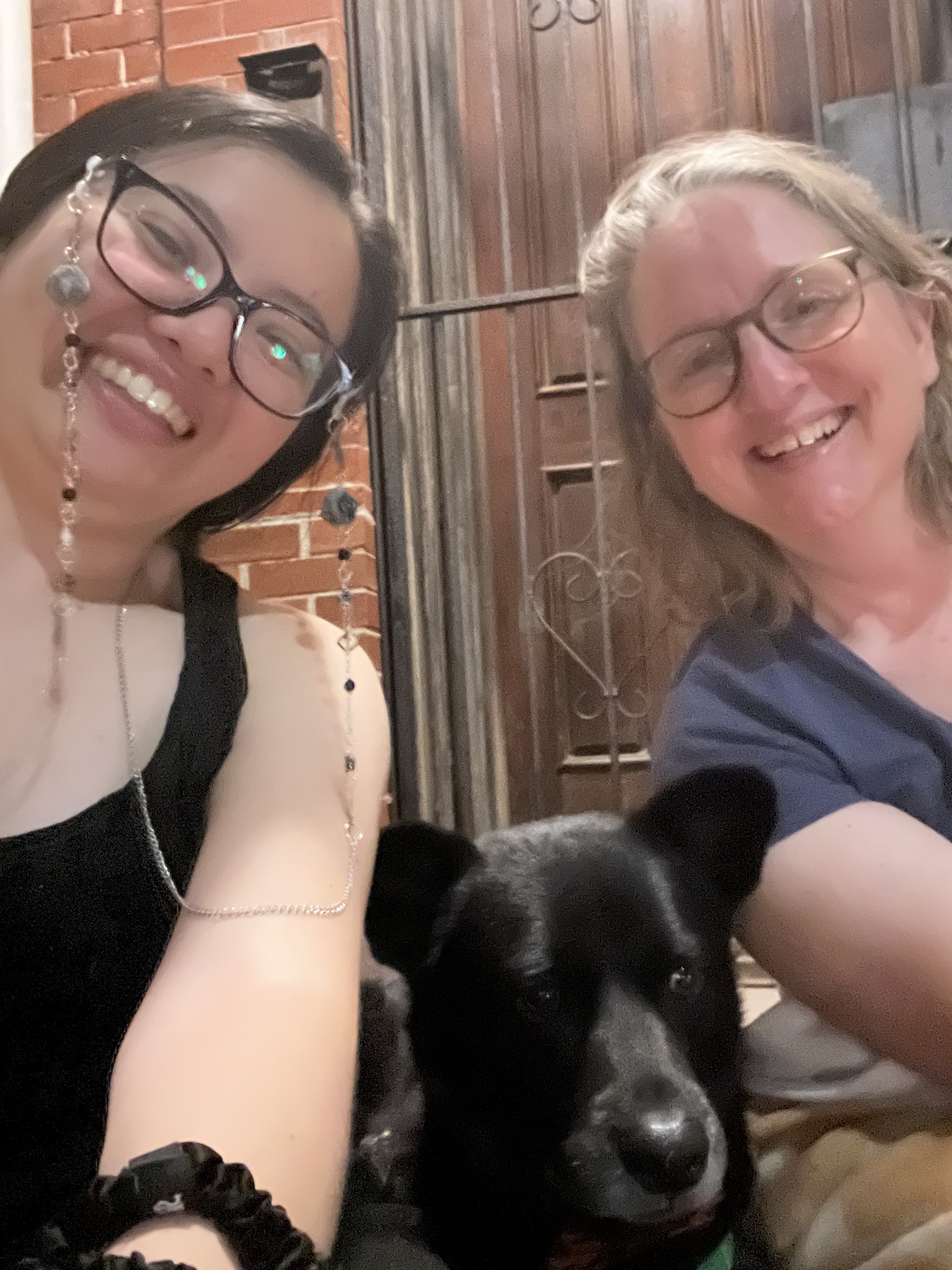
Me & my force-free dog training colleague, Julie, with Watson during Trick or Treat in Brooklyn
There are a lot of reasons that folks give for "needing" aversive tools, coercive methods, or something else. These include but not limited to:
Safety of the dog
Safety of the human
Speed of training
Physical limitations of the human
Force free methods have been tried and not worked
Needing the dog to do something in particular that they aren't doing
All of these things are important considerations. In general, we have less aversive ways of working toward all goals. So let's take a look at the objections above.
Safety of the dog - This is a top priority for me and for all the trainers I know. In my experience, hastily applied aversive approaches stop the behavior in the moment but don't change the behavior for the long term. I aim to build training plans that keep the dog safe for the long term.
Safety of the human - This is also a top priority for me. Common unsafe behaviors associated with human safety are pulling on the leash, nipping, and growling. Those behaviors are communication from a dog and often they're communicating that they are overwhelmed. When we suppress those expressions of overwhelm, we ignore how the dog feels and, while suppression might work for while, often the big feelings the dog is having overcome the aversive correction being given and everyone is back to being unsafe. I look for the root cause of the behavior and help to change that.
Speed of training - Who's measuring the speed? I've had many clients over the course of my career who got a quick fix that worked for a little while and then they came to me and it took us a long time to meet their goals because we had to backtrack over the upsetting experiences the dog had. In general, if you start with force free, evidence-based methods, even if it goes a little slower than the quick fix, it's faster than getting the quick fix and then repairing any potential fallout from that fix before you can move forward on your goals.
Physical limitations of the human - One of the things I love about the way I train is that it leaves a lot of room for creativity. Heck, it demands it! If a client has a condition that makes some techniques challenging for them, we dig a little deeper in the toolkit and figure out how to adapt. Sometimes it's a change of harness or leash. Sometimes it's hiring someone to help. Sometimes it's something completely different. When we work together we can almost always figure it out.
Force free methods have been tried and not worked - Honestly, a fair amount of the blame for this has to go to the internet. Not all training sources are equal and there are so many of them on the world wide web, it's almost impossible for a regular person to evaluate them. Sometimes it's hard for me, and I'm a professional! Trying force free methods with the guidance of a skilled trainer is different than taking generic advice from the internet so please let your local force free, positive reinforcement trainers a chance to help!
Especially in a busy place, like Brooklyn, there's a lot of nuance to how we apply training. Our dogs are experiencing so many things in the course of even the shortest pee break that a standard, cookie cutter explanation of techniques doesn't always cut the mustard. Often with these cases, once I'm able to teach folks about the training concepts and walk them through some adjustments for our tight spaces and busy walkways not only do they have more success but they get on board for learning all about training and behavior. I love when that happens.
Needing the dog to do something in particular that they aren't doing - We all have a picture in our head of the life we want to lead with our new pup. Most of the time that picture doesn't match up with real life. Usually it's a pretty small gap to bridge to make life with your dog fun and fulfilling but sometimes it's wider. In those cases I open up conversations with clients about why they need the dog to do these things and whether those are realistic requests of this particular dog or any dog. From there we can make a plan for how to get the dogs and the humans to a place of good compromise.
BONUS - Sometimes a dog is just not the right fit for a family or a location or a situation. This can be absolutely heartbreaking. It's so helpful to have someone to talk to about whether this is true for your family, I know it's been helpful for me when I've had to have hard conversations about my pets. I have practice and training specifically so I can pass along that kind of support to other people.
Let's not spread these myths! And let's get out there and help our unique and well-loved pups!
Ready to train with a qualified trainer who wants you and your dog to have fun and feel safe? That's me!
New clients head over to the short contact form on the website.
Returning clients use this link to book.
Wondering about classes?
FREE Ask the Trainer Zoom on Saturdays at 11a (some holidays excepted).

Publications
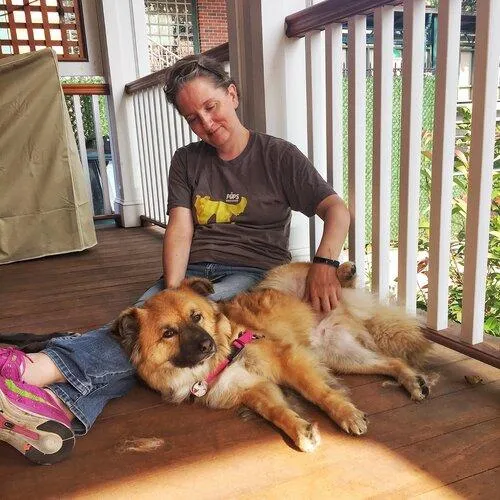
“PUSHING ALL MY BUTTONS: DOGS USING COMMUNICATION BUTTONS”
-Written by Elizabeth H. "Kizz" Robinson, CDBC, CPDT-KA for IAABC Journal, Sept. 2021

“USING DOG TRAINING TOOLS FOR MYSELF DURING A PANDEMIC”
-Written by Elizabeth H. "Kizz" Robinson, CDBC, CPDT-KA for IAABC Journal, May 2020
Speaking Events
Kizz Robinson & Julie Wintrob presented
Greeting the Whole Family: Promoting safe interactions with tenants' dogs
Supportive Housing Network of NY Conference 2024

Photos by Sean Sime
Podcast Appearances
Coming soon!