
Blog
Stay up to date with Kizz Robinson & 2B Dog Training and check out my blog here!
The Spring Regression aka Why is my dog going nuts?
"I don't know what happened but none of our training is working!" - All of us, come spring
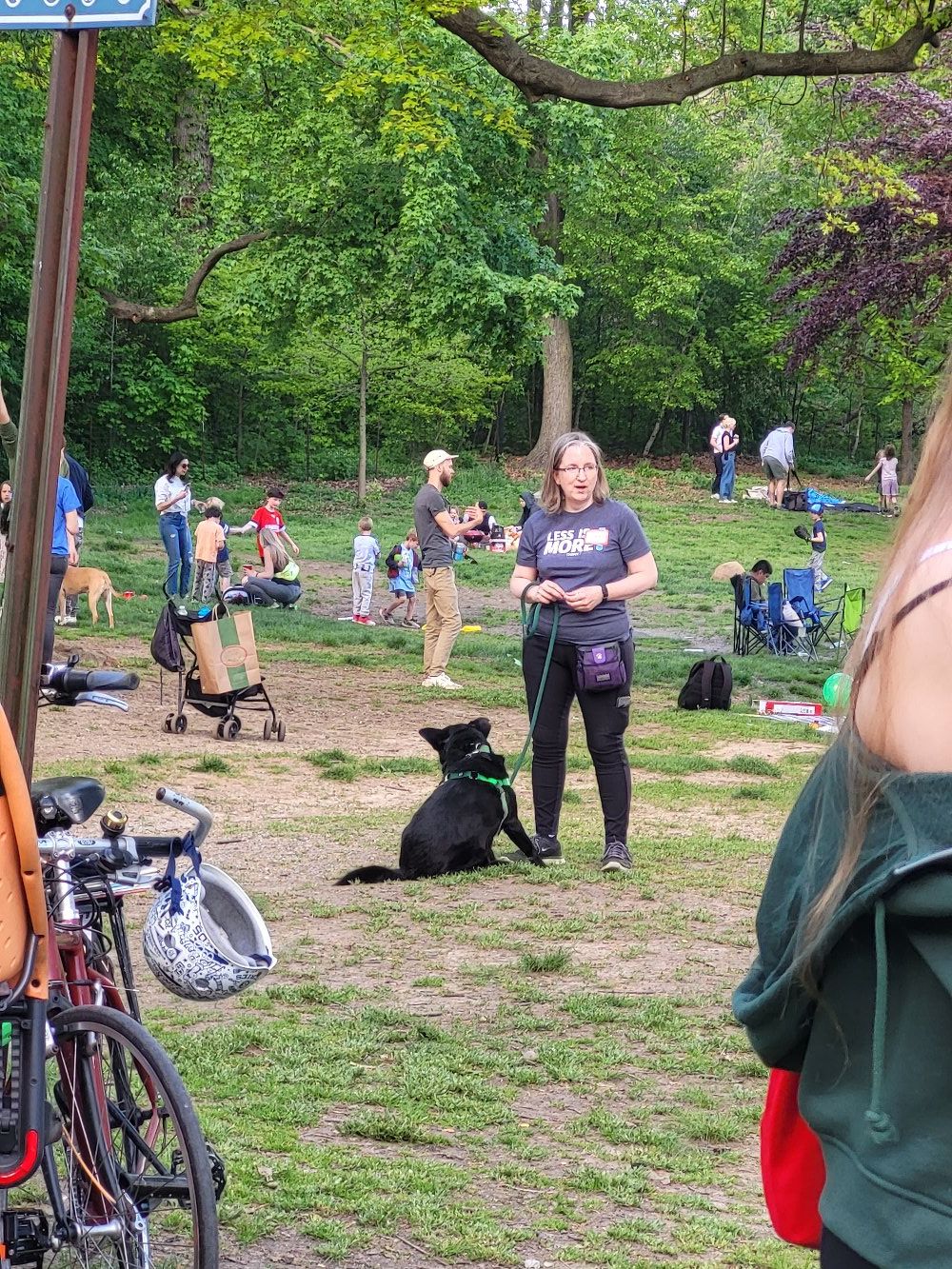
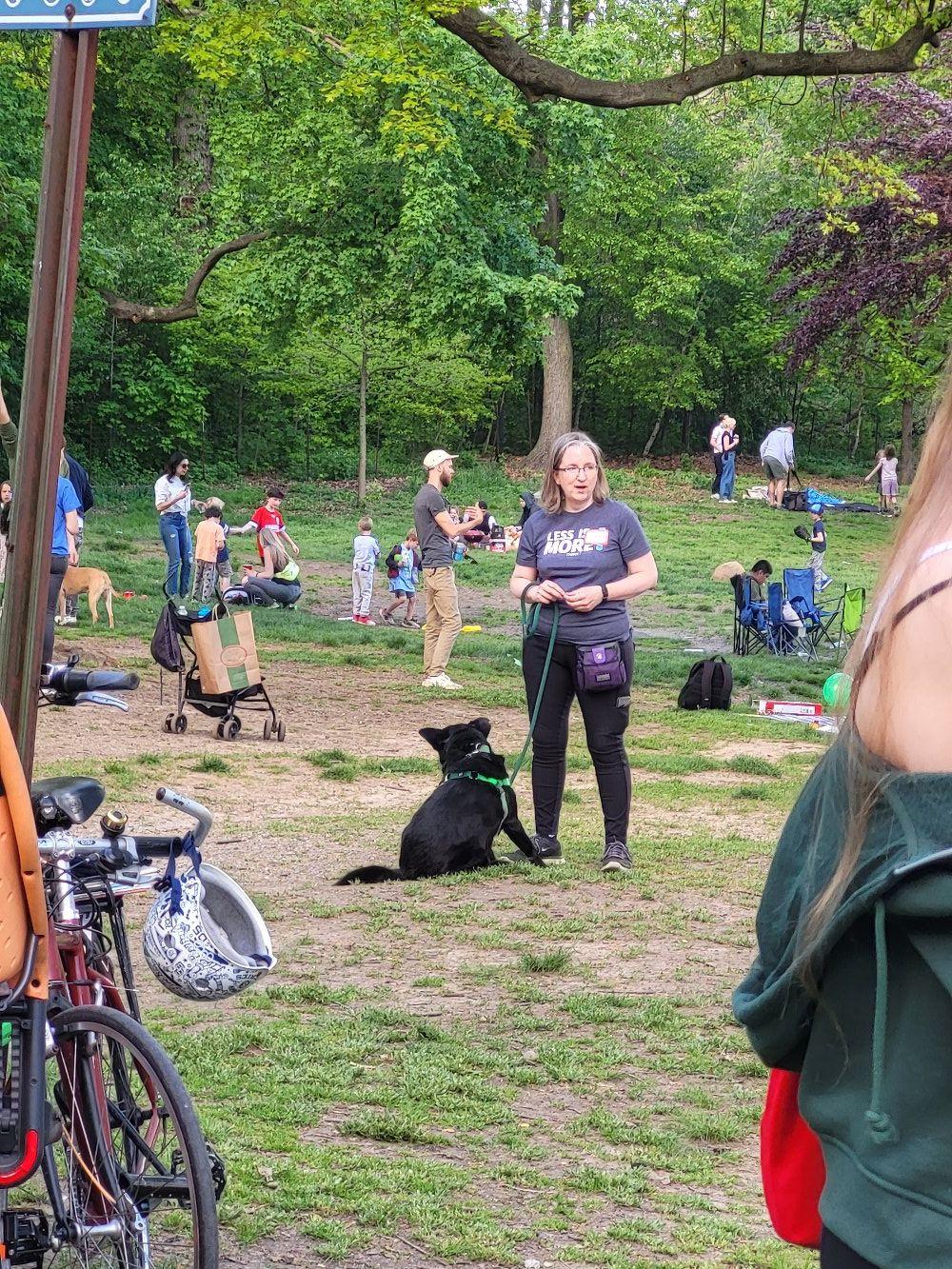
Kizz & Watson in Prospect Park, Brooklyn on an average nice day. Kizz Though it would be a good place for some training but they were both overwhelmed.
A few years ago I was working with my friend, Jennie, and her dog, Fleet. Fleet has a great nose. It's fully on brand for him to get absorbed in a scent and shut down all his other senses. We'd worked hard all winter and Fleet was getting so much better on walks and indoors. Then in April we had a big regression. He was too distracted to listen to cues and almost couldn't be interrupted when sniffing.
We chalked it up to learning not being linear and went back a few steps and he was able to get back to where he had been. We kept working on all his training goals.
The following April, BAM! Nose turned on and everything else turned off.
Fortunately Jennie is a fabulous record keeper. She looked back at her training and behavior data and discovered that this had happened a year ago. We brainstormed what could be happening in April every year that could do this to him.
AHA!
In April it starts to get warmer here. When it gets warmer things start to melt. Also, things start to grow and bloom. Birds and animals (including humans) come out of their winter rests. All of that would be exciting to anyone but to a dog with a nose like Fleet's? Irresistible!
The Fleet Effect
So, if your dog is more distractable or more reactive recently, it's ok. Your training isn't regressing, the environment leveled up your difficulty without your permission. It's frustrating but you can work through it.
When we make a training plan:
We assess how much excitement your dog can handle and still learn well. This includes where you walk, how long you walk, what you do what you're out there, what you do at home to prepare and recover.
We manage the environment so our dogs are exposed to safe (for them) levels of excitement. This could mean white noise or music in your home, going out a particular door to your building, picking a certain harness or leash, allowing your dog access to certain rooms at certain times of day.
When we level up one thing in our training, we make everything else easier until our pup is used to that new level. For example, if our dog can walk calmly and happily for 30 mins we might try a 45 min walk and be much more choosy about the quietest time of day and route, bring higher value treats, and support our dog more often.
We give our dogs easy days in between the challenging ones to help them reset their nervous systems and keep succeeding.
Support your pup sooner, more frequently, and with higher value rewards. Give them time to recover from the excitement. And, of course, call a qualified force-free trainer to help you through this and and keep working toward your goals!
Questions about how to navigate a regression? I've got a plan for that!
New clients head over to the short contact form on the website.
Returning clients use this link to book.
Wondering about classes?
FREE Ask the Trainer Zoom on Saturdays at 11a (some holidays excepted).

Publications
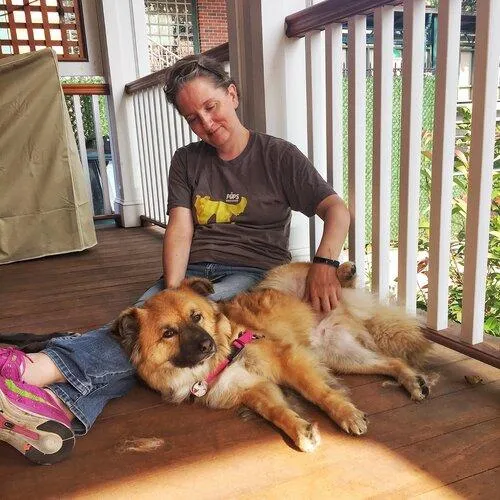
“PUSHING ALL MY BUTTONS: DOGS USING COMMUNICATION BUTTONS”
-Written by Elizabeth H. "Kizz" Robinson, CDBC, CPDT-KA for IAABC Journal, Sept. 2021

“USING DOG TRAINING TOOLS FOR MYSELF DURING A PANDEMIC”
-Written by Elizabeth H. "Kizz" Robinson, CDBC, CPDT-KA for IAABC Journal, May 2020
Speaking Events
Kizz Robinson & Julie Wintrob presented
Greeting the Whole Family: Promoting safe interactions with tenants' dogs
Supportive Housing Network of NY Conference 2024

Photos by Sean Sime
Podcast Appearances
Coming soon!