Short Leash - Long Leash Which Stops Dogs Pulling?
"My dog pulls really hard. I've shortened the leash to keep him really close but he still pulls a lot! Help!"
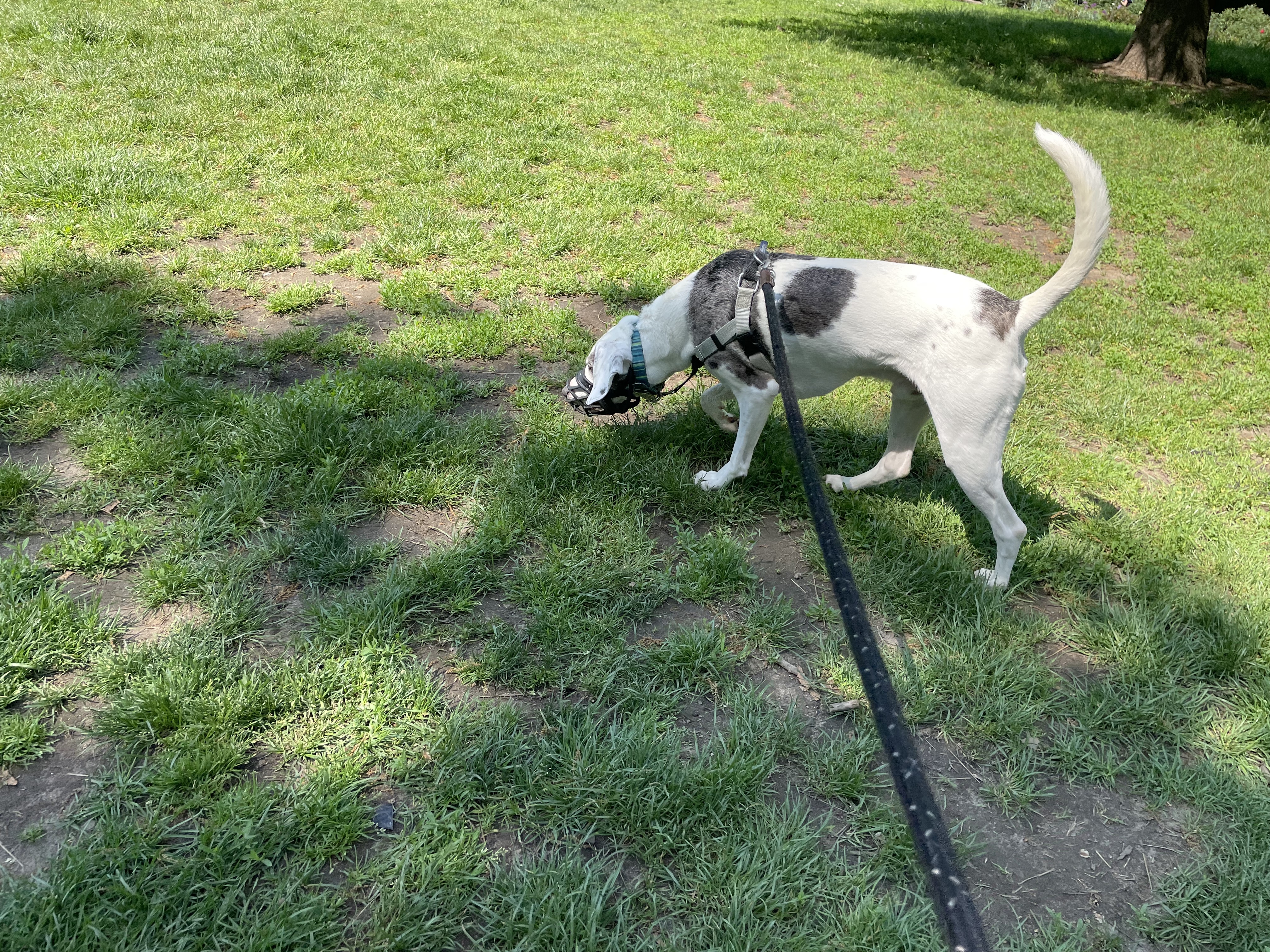
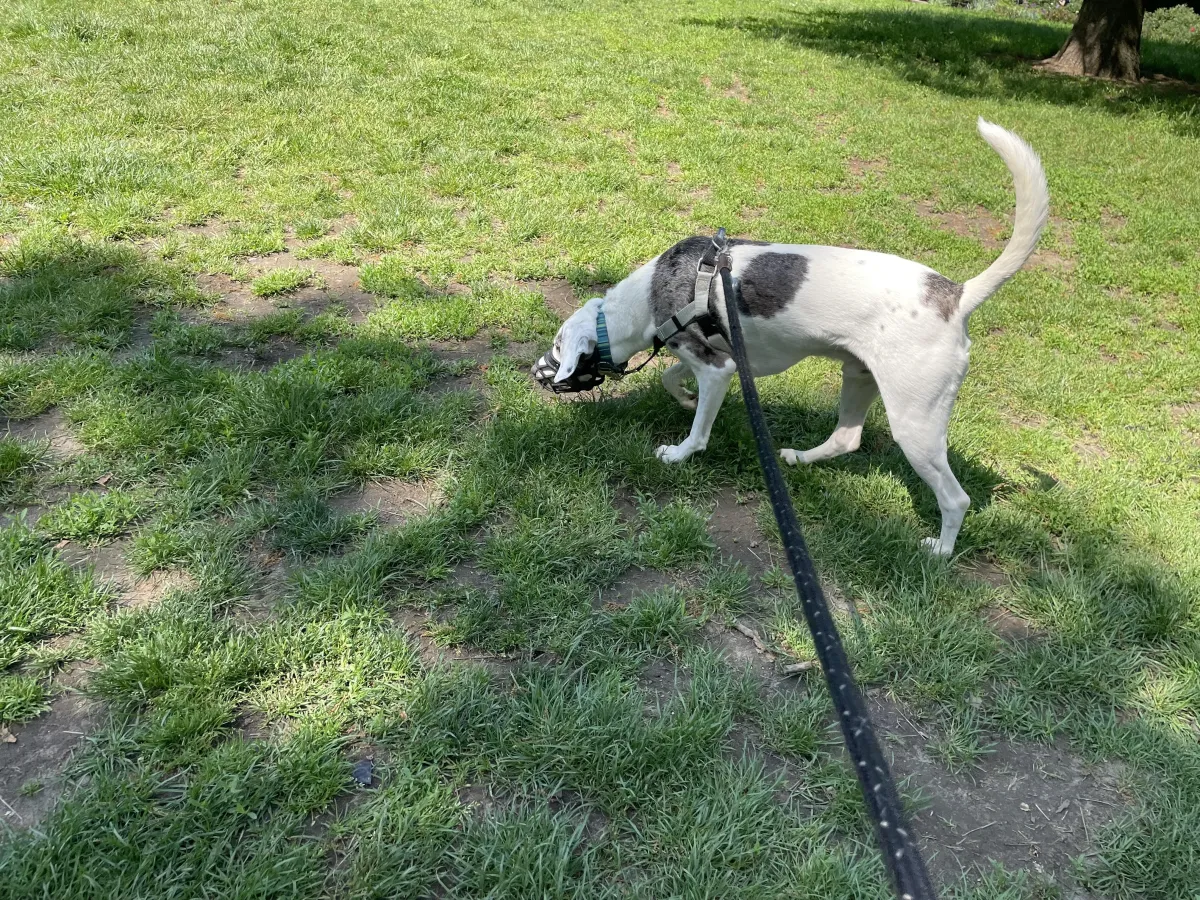
Fleet sniffs so hard he forgets I'm on the other end of the leash sometimes.
The approach above is something I hear often when folks contact me for help.
I have some questions:
Me: "Have you ever tried a longer leash?"
Them: "He zigs and zags all over the place. He won't heel."
Me: "Does he ever stay close to you?"
Them: "Sometimes."
Me: "What do you do then?"
Them: "Well, when he pulls I shorten the leash some more and then he pulls more and sometimes he starts biting the leash!"
Me: "Got it. That doesn't sound super safe. What do you do when he isn't pulling?"
Them: "I don't understand the question."
Me: "The answer might be 'nothing' and that's totally valid. I'm just wondering if, when he's doing what you want - not pulling - you're doing anything to let him know that's the right thing."
Them: "I tried telling him he was a good boy but then he started pulling again."
Me: "I like your instincts! I think we can find something that works more efficiently, though."
You might be wondering why I'm asking all these questions. For a few reasons, really.
First, sometimes if we use a slightly longer leash the pulling magically disappears.
"What?!?!" I can hear you asking.
All animals have an opposition reflex. If you pull or push us in one direction we'll push or pull in the opposite direction. Think about what you would do if someone came up behind you and grabbed the neck of your shirt and pulled. You'd instinctively pop forward to yank the collar out of their hand, right? I would.
The same thing happens to your dog when you tighten up their leash. They pull forward, sometimes launch forward to get where they want to go.
Trainers say, "All behavior has a function."
In the case of leash pulling, our dogs are trying to sniff (or eat) something, trying to meet someone, or just plain walking faster than us because four feet are faster than two.
Because of all that, our dog probably has no idea that walking next to each other is something we're interested in. Since they don't understand verbal communication until we teach them, we have to show them the thing we want another way. The simplest way is to give them some food every time they're doing what we want and we'll see them do that more often!
They look back to check in? Offer a piece of food near your body.
They walk right next to you? Feed a few pieces of food one after the other.
They're moving along, slightly ahead of you, on a loose leash? Toss pieces of food in front of them so they keep going at that pace.
They want to sniff where that dog just peed? Run with them so they get to it on a loose leash.
I'll be honest, that all looks simple on the screen but it can be challenging in real life. You're moving, the dog is moving, the world is moving around you and you're supposed to notice your dog's behavior and deploy treats quickly and accurately all while not accidentally wandering into traffic? It's understandable that you'd want some help.
It's a great idea to work with a trainer for polite leash walking, especially if you live in a busy area. Trainers can help you identify what your dog needs and help you hone your skills. We love to help!
Ready for calmer walks? Come right over here with your 6 foot leash and pocket full of treats!
New clients head over to the short contact form on the website.
Returning clients use this link to book.
Wondering about classes?
FREE Ask the Trainer Zoom on Saturdays at 11a (some holidays excepted).